
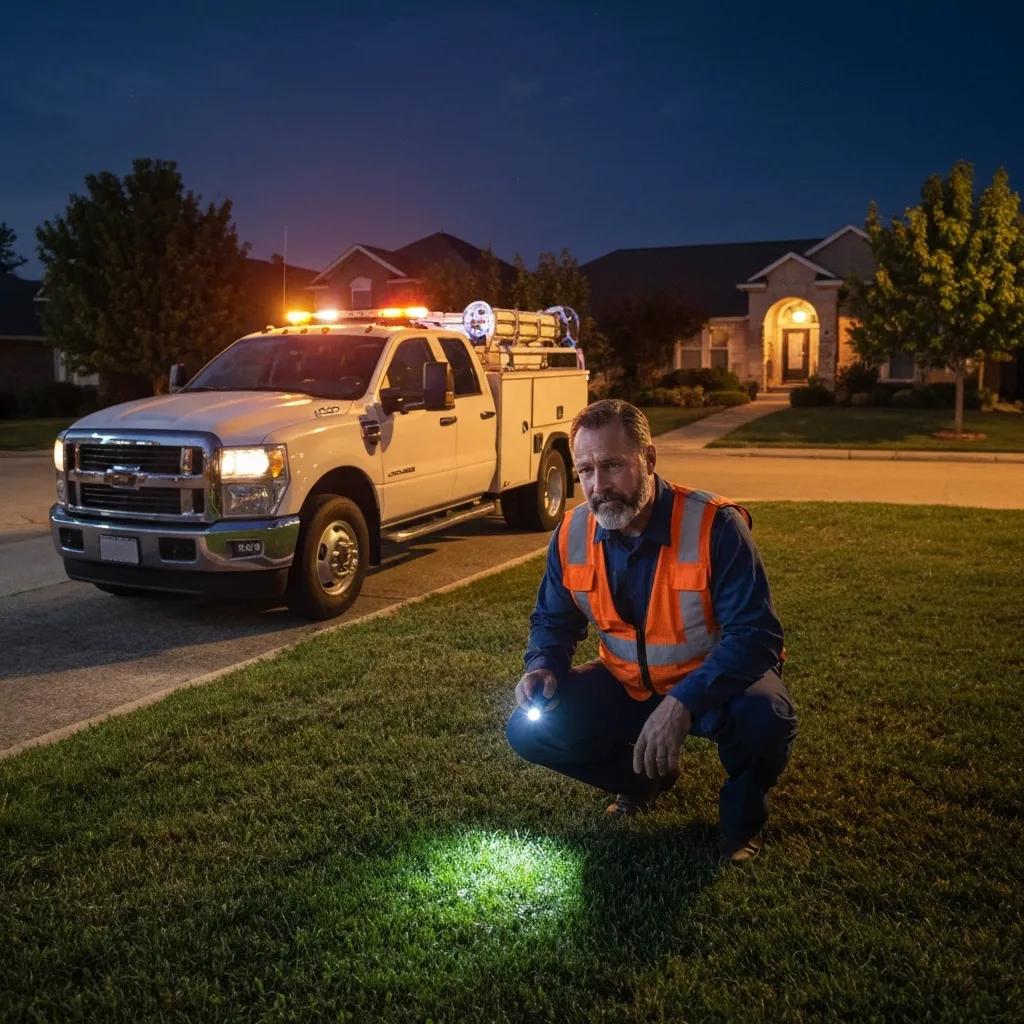
Lights Flicker When Appliances Turn On
Many homeowners notice lights flicker when appliances turn on in the kitchen, hallway, or living room when a microwave starts, the refrigerator compressor kicks in, or the air conditioner begins a cooling cycle. At first, the change may seem minor and easy to ignore. In some homes it happens so briefly that people assume it is normal. In others, the flicker is obvious enough to make the whole room feel unstable for a moment. Lights Flicker When Appliances Turn On is one of the most common complaints homeowners describe when an electrical system is under strain, aging, or no longer matched to the way the house uses power every day.
Electrical systems are built to deliver stable voltage to lighting, outlets, appliances, and equipment across the home. When that balance is interrupted, lights may react first because they provide an immediate visual clue that something changed in the circuit or panel. A momentary dip may happen when a large motor starts, but repeated or severe flickering can also point to overloaded circuits, loose wiring connections, panel limitations, shared branch circuits, or voltage problems that deserve professional attention. Understanding why Lights Flicker When Appliances Turn On helps homeowners decide when a brief dim is ordinary startup behavior and when it signals an electrical issue that should be inspected.
Why This Happens in Residential Electrical Systems
When an appliance starts, it may draw more power for a short moment than it does while running steadily. Motors and compressors often need extra current during startup, and that temporary demand can pull voltage away from lighting on the same or related circuits. If the system is in good condition and properly sized, the effect may be small. If the panel is older, the wiring is loose, or the circuit is already carrying heavy load, the voltage dip may become easier to see. Lights Flicker When Appliances Turn On because the home is reacting to a shift in electrical demand that affects how much stable voltage reaches nearby fixtures.
This does not always mean there is an emergency, but patterns matter. A slight dim when the air conditioner starts may be very different from repeated flickering every time the microwave runs, the refrigerator cycles, or the washing machine changes modes. Frequency, severity, and location all help determine what is going on. Homeowners who understand why Lights Flicker When Appliances Turn On are in a better position to notice whether the issue is limited to one room, one circuit, one appliance, or a broader system condition affecting multiple parts of the house.
- Large appliances draw extra startup current
- Voltage may dip briefly during motor startup
- Older panels may struggle with modern demand
- Loose connections can magnify flicker symptoms
- Shared circuits often reveal load imbalance
- Repeated flickering points to a need for inspection
Common Appliances That Trigger Flickering
Not every appliance affects the electrical system the same way. Equipment with motors, compressors, heating elements, or large startup loads tends to be the most noticeable. Refrigerators, microwaves, HVAC systems, dishwashers, garbage disposals, washing machines, dryers, freezers, and portable air conditioning units are common examples. Even when these appliances appear to function normally, the way they draw power can reveal weaknesses elsewhere in the system. Lights Flicker When Appliances Turn On most often when one of these higher-demand devices begins a cycle and momentarily changes the electrical load distribution inside the home.
Homeowners sometimes notice that one specific appliance always triggers the same reaction. In other homes, several different devices seem to cause the lights to dim. That difference matters. If only one appliance creates the problem, the issue may involve that appliance, its circuit, or the load pattern in that area. If many appliances cause the same reaction, the panel, service, or wiring condition may deserve closer evaluation. Looking at which loads create the symptom is one of the most useful steps in figuring out why Lights Flicker When Appliances Turn On in a specific house.
When Brief Flicker May Be Minor
Some small amount of temporary dimming can happen in otherwise healthy systems, especially when larger motor-driven equipment starts up. A quick and subtle dip that lasts only a moment and does not seem to worsen over time may be less concerning than severe or repeated flickering. Even so, minor behavior should still be monitored if it becomes more frequent, spreads to other parts of the house, or starts happening with smaller appliances that normally should not affect the lights much. Lights Flicker When Appliances Turn On can begin as a mild symptom before a homeowner realizes the pattern is becoming more obvious.
The practical question is not only whether the flicker exists, but whether it feels stable, brief, and predictable or whether it seems to be growing stronger and less consistent. A house where the lights dim slightly for a split second during an air conditioner startup may be very different from a house where several rooms blink every time the refrigerator cycles. Homeowners who want to understand why Lights Flicker When Appliances Turn On should pay attention to how much of the house is involved and whether the effect is getting easier to notice over time.
Overloaded Circuits Can Cause Voltage Drop
One of the most common causes of noticeable lighting fluctuation is an overloaded circuit. Branch circuits are designed to carry a certain amount of current safely. When too many devices and appliances share the same circuit, lighting performance can become unstable as the circuit approaches its limit. That instability may show up before a breaker trips, especially when an appliance with high startup demand begins operating. Lights Flicker When Appliances Turn On in these situations because the circuit is being asked to support more electrical demand than it can distribute comfortably.
Overloaded circuits are especially common in kitchens, laundry rooms, garages, bonus rooms, and older bedrooms where homeowners have gradually added more equipment than the original electrical layout was designed to support. Microwaves, toasters, coffee makers, chargers, televisions, and portable climate-control equipment can all compete for the same branch circuit. If lighting is tied into that branch or affected by related voltage drop, the result can be visible flickering. Understanding why Lights Flicker When Appliances Turn On often starts with identifying whether lighting and high-demand equipment are sharing limited circuit capacity.
Older Electrical Panels Often Contribute
Many older homes were built when electrical demand looked very different than it does today. Families now use more appliances, more electronics, more charging equipment, and more comfort-related devices across every room of the house. An older panel may still function, but that does not always mean it distributes power efficiently for modern living patterns. When service equipment is outdated, undersized, or already stressed, even normal appliance use can expose those limitations. Lights Flicker When Appliances Turn On more noticeably in homes where the panel is struggling to keep up with current household expectations.
Panel-related issues are not always dramatic. Sometimes the problem is subtle and shows up only as dimming during appliance startup, repeated breaker trips, or inconsistent performance in one side of the house. Other times the home may also show signs such as buzzing, heat, or circuits that seem unusually sensitive. A professional inspection can determine whether the flickering points to a circuit-level issue, panel limitation, or larger service concern. For many homeowners, learning why Lights Flicker When Appliances Turn On leads to the discovery that the home’s electrical infrastructure has simply fallen behind the way the household actually uses power.
Loose Wiring Connections Can Make Flickering Worse
Loose connections are another important reason lights behave unpredictably during appliance startup. Electricity depends on stable, secure pathways through outlets, switches, junctions, fixtures, and the panel itself. When a connection loosens, resistance can increase. Higher resistance can lead to heat, intermittent performance, and more noticeable voltage fluctuation when the system comes under load. Lights Flicker When Appliances Turn On because the added demand exposes instability at a connection point that might not be obvious when the circuit is lightly loaded.
Loose wiring concerns matter because they may start as a nuisance and later become a safety issue. A light that flickers now and then may not seem urgent, but if the root cause is a failing connection, the symptom can become stronger over time. Homeowners might also notice warm outlets, a switch that behaves inconsistently, or a faint buzzing sound in the same area. Those signs should not be ignored. When looking at why Lights Flicker When Appliances Turn On, connection quality is one of the most important pieces of the diagnostic process because it can affect both reliability and safety.
Voltage Fluctuations Across the Home
Lighting problems are often described as flicker, dimming, or blinking, but the deeper issue is usually voltage fluctuation. Homes are designed to operate within a normal voltage range. When the available voltage dips or varies too much, lights respond quickly because illumination changes are easy to see. Appliances starting on a strained system, utility-side irregularities, internal load shifts, and loose electrical pathways can all contribute to unstable voltage. Lights Flicker When Appliances Turn On because lighting is often the first visible symptom of those changing electrical conditions.
Voltage instability is worth investigating not only because it affects lights, but also because it can shorten the life of electronics and sensitive equipment. Routers, computers, smart appliances, and entertainment systems all operate best with stable electrical supply. If the home experiences repeated fluctuation, the impact may extend beyond lighting appearance alone. That broader perspective matters when homeowners ask why Lights Flicker When Appliances Turn On, because the answer can affect much more than one lamp or ceiling fixture.
Shared Neutral or Multi-Room Effects
Sometimes flickering is limited to one room. In other homes it shows up in several areas at once, even when the appliance is running somewhere else. That pattern can suggest the issue goes beyond a single light fixture. Shared circuits, common service pathways, or broader voltage drop across the system may be involved. Lights Flicker When Appliances Turn On throughout multiple rooms when the electrical demand of one device influences other parts of the home through the panel or related branch circuits.
This is one reason homeowners should pay attention to where the symptom appears. If only one kitchen light flickers when the microwave runs, the problem may be relatively localized. If the kitchen, hallway, and living room all dim together when the air conditioner starts, the system may be showing a larger load or distribution issue. Observing these patterns helps electricians diagnose why Lights Flicker When Appliances Turn On and whether the solution involves one device, one circuit, or a more comprehensive electrical improvement.
Appliance Condition Still Matters
Sometimes the electrical system is not the only factor. An aging or malfunctioning appliance may draw more current than it should during startup or operation, making normal voltage changes more severe. A refrigerator with compressor issues, a microwave with internal wear, or HVAC equipment under strain can create stronger load changes than expected. Lights Flicker When Appliances Turn On in these cases because the appliance itself is contributing to the instability rather than simply exposing it.
That is why good troubleshooting does not stop at the panel. Electricians often consider whether the symptom follows one appliance, whether the equipment seems to struggle during startup, and whether related warning signs such as breaker trips, noise, or unusual cycling are present. Understanding why Lights Flicker When Appliances Turn On sometimes requires looking at both sides of the equation: the house that supplies power and the appliance that demands it.
When Flickering Becomes a Safety Concern
Not every flicker means danger, but some warning signs should move the issue into a higher-priority category. If flickering is strong, frequent, worsening, or combined with buzzing sounds, warm outlets, a burning odor, tripping breakers, or devices that lose power unexpectedly, the system should be inspected promptly. Lights Flicker When Appliances Turn On may be the first symptom a homeowner notices before more serious electrical behavior appears elsewhere.
- Lights dim deeply instead of briefly
- Multiple rooms flicker at the same time
- Breakers trip during appliance use
- Outlets or switches feel warm
- Buzzing or humming is heard nearby
- Burning smells appear around devices or panel
These signs matter because they point away from simple startup behavior and toward electrical stress or connection problems that may worsen if ignored. Homeowners do not need to determine the exact technical cause on their own. They do need to recognize when ordinary annoyance has crossed into a situation that deserves professional evaluation. That distinction is central to understanding why Lights Flicker When Appliances Turn On and when service should be scheduled.
How Electricians Diagnose the Cause
Electrical troubleshooting is useful because the same visible symptom can come from several different issues. A mild dimming event might be caused by expected motor startup, while a more serious flicker could reflect overloaded circuits, weak panel performance, loose terminations, or equipment faults. To identify the real cause, electricians inspect the panel, evaluate circuit layout, measure voltage behavior, consider appliance demand, and look for evidence of wear or poor connections. Lights Flicker When Appliances Turn On for different reasons in different homes, so diagnosis needs to be based on actual system conditions rather than guesswork.
Troubleshooting may include voltage testing, circuit load analysis, panel inspection, wiring diagnostics, and discussion of when the symptom occurs most clearly. Homeowners can help by noting which appliances trigger the flicker, how long it lasts, whether one or several rooms are involved, and whether the issue is getting worse. That information helps narrow down why Lights Flicker When Appliances Turn On and whether the home needs a focused repair or a larger upgrade to improve stability.
Upgrades That Improve Electrical Stability
Once the cause is identified, the solution depends on the actual problem. Some homes need dedicated circuits for heavier appliance loads. Others need panel improvements, device replacements, repaired connections, or redistribution of electrical demand. In certain cases, upgrading lighting or outlet configurations can also help support more reliable operation. Lights Flicker When Appliances Turn On less often when the system is properly matched to the way the home uses power and when weak points are corrected before they continue affecting the rest of the circuit.
The goal is not only to stop the visible flicker, but also to improve the long-term health of the system. Stable lighting is a sign that voltage delivery is more consistent, circuits are carrying appropriate loads, and the home is better prepared for modern electrical demand. That is why homeowners investigating why Lights Flicker When Appliances Turn On often end up improving convenience, safety, and overall performance at the same time.
Serving Newnan and Nearby Areas
Homes throughout Newnan and surrounding communities experience the same mix of electrical aging, appliance demand, and modernization challenges. Older houses may have limited circuit capacity, while newer homes may still develop issues related to loose devices, appliance faults, or heavy load concentration in busy areas like kitchens and laundry spaces. Lights Flicker When Appliances Turn On in many different types of homes, which is why local troubleshooting experience matters when evaluating what the symptom actually means in a specific property.
Regional service matters because it combines technical diagnosis with familiarity around the kinds of residential systems commonly found in the area. Whether the issue involves an older panel, a busy kitchen circuit, or an appliance that has started drawing poorly, homeowners benefit from practical recommendations grounded in the actual home rather than generic advice.
Electrical Safety Resource
Homeowners who want to learn more about everyday electrical safety can review guidance from trusted sources. While general safety information is helpful, repeated voltage-related symptoms should still be evaluated on site when the home shows ongoing performance changes. Lights Flicker When Appliances Turn On is a good example of a symptom that may start as a question and later become a clear service issue once patterns are confirmed.
Electrical Safety Foundation International
Schedule Professional Electrical Service
If lighting in your home dims or flickers whenever major appliances start, it is a good idea to have the system evaluated before the issue becomes more disruptive. Shocking Electric Solutions provides residential troubleshooting and repair services designed to identify the source of voltage changes, improve electrical stability, and restore reliable performance. Lights Flicker When Appliances Turn On for many different reasons, and the right solution begins with accurate diagnosis rather than guessing or waiting for the symptom to become worse.
Whether the cause is circuit overload, panel limitations, loose wiring, or the condition of the appliance itself, professional service helps protect your home and support better long-term electrical performance. If you have been noticing that Lights Flicker When Appliances Turn On more often or more severely, now is the right time to schedule an inspection and get clear answers about what your system needs.
What Homeowners Can Notice Before the Visit
Clear observations help make troubleshooting faster and more accurate. Homeowners can note which appliance causes the issue, whether the flicker is brief or strong, whether one room or several rooms are affected, and whether the problem appears at the same time every day or only under heavier household use. These details help explain why Lights Flicker When Appliances Turn On in your particular home and can point an electrician more quickly toward the right circuit, device, or service area to inspect.
It is also useful to note whether the lights simply dim, actually blink off and on, or are accompanied by other symptoms such as panel noise, tripped breakers, or warm outlets. Good notes do not replace diagnosis, but they do make the service visit more efficient and more grounded in what the homeowner is experiencing in normal daily life.
Why Early Action Makes a Difference
Electrical symptoms rarely improve on their own. A slight flicker caused by rising demand, weakening connections, or equipment wear usually becomes more noticeable over time rather than less. Taking action early can reduce stress on the system, help prevent related failures, and keep a manageable repair from turning into a broader electrical disruption. That is why homeowners should treat persistent flickering as a useful warning rather than something to keep tolerating indefinitely.
For families who depend on stable lighting, appliances, internet equipment, and comfort systems every day, electrical consistency matters. Reliable power improves convenience, supports appliance life, and gives homeowners more confidence in the safety of the house. When Lights Flicker When Appliances Turn On repeatedly, a professional evaluation can turn an annoying mystery into a clear explanation and a practical next step.
How Modern Living Increases Electrical Demand
Residential electrical systems are being asked to do more than they did in the past. Kitchens support multiple countertop appliances, bedrooms include chargers and entertainment devices, living rooms carry larger televisions and network gear, and many homes now include work-from-home equipment that stays active for long stretches of the day. This added demand changes how circuits behave under load, especially in homes that still rely on older layouts or limited branch circuit distribution. Lights Flicker When Appliances Turn On more often in houses where the original electrical design no longer reflects the way the property is actually used. What once served basic lighting and a few small devices may now be supporting microwaves, coffee makers, air fryers, printers, routers, monitors, and climate-related plug-in equipment that place steady pressure on the same system.
That does not automatically mean the house is unsafe, but it does mean electrical performance should be evaluated in the context of present-day use rather than original construction alone. A room that worked well years ago may now carry much heavier demand because of new routines, added devices, and changes in how the home functions every day.
Why Pattern Recognition Helps Diagnose the Problem
One of the most useful things homeowners can do is watch for patterns instead of treating each flicker as an isolated moment. Does the issue happen only when the microwave starts, only when the HVAC system kicks on, or every time the refrigerator cycles? Does it affect recessed lights, lamps, bathroom fixtures, or the whole floor? Pattern recognition helps separate occasional minor dimming from a recurring electrical behavior that deserves inspection. Lights Flicker When Appliances Turn On in recognizable ways, and those patterns often reveal whether the issue is tied to one appliance, one branch circuit, or a broader system condition.
Consistency matters. If the same event produces the same response every time, troubleshooting becomes more precise. An electrician can compare load timing, circuit layout, and fixture behavior to narrow down likely causes quickly. That kind of detail leads to better answers and more efficient repairs than a general description that the lights sometimes seem off.
Reliable Power Supports Everyday Comfort
Stable electrical performance affects more than how a room looks when the lights dim for a moment. It supports comfort, convenience, and confidence in the home. Families rely on dependable power for cooking, laundry, internet service, entertainment, charging, heating and cooling, and basic daily routines that should not feel uncertain every time a larger appliance runs. When the system is working well, those routines happen in the background without anyone thinking about them. Lights Flicker When Appliances Turn On can be a reminder that the electrical system may need attention so the house can keep up with modern living in a safer and more reliable way.
Addressing the cause early can also improve peace of mind. Homeowners often feel better once they understand whether the issue is a manageable voltage drop, a circuit loading problem, a loose connection, or a panel condition that needs correction. Clear diagnosis turns uncertainty into a practical plan, and that helps the whole home feel more dependable again.