
Electrical problem at home? Talk to a licensed Newnan electrician.
Free estimates · GA License EN216120 · Mon–Fri 8–5
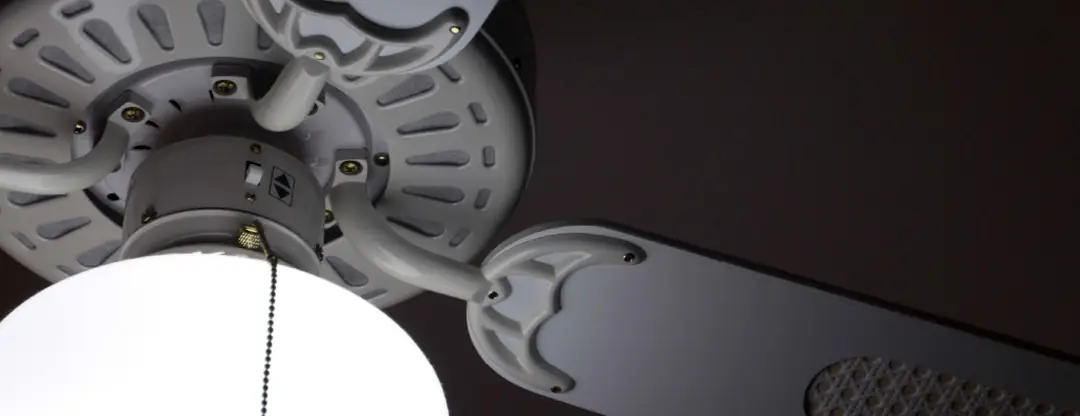
A ceiling fan should make a room more comfortable, not wobble overhead, trip a breaker, or leave you wondering whether it is safely attached. Knowing how to choose a ceiling fan for the room is the first step, but a safe result takes more than picking a fan that matches the décor. It requires the right electrical support, correct wiring, secure mounting, and a final check that everything operates as it should.
A properly installed ceiling fan improves air circulation year-round. In summer, it helps move cooled air through the room. In cooler months, reversing the blade direction can gently circulate warm air without creating a draft. But those benefits only matter when the fan is mounted and wired correctly.
Why Ceiling Fan Installation Is Not a Simple Swap
It is easy to look at an existing light fixture and assume a ceiling fan can go in its place. Sometimes it can. Often, it cannot without changes behind the ceiling.
A fan is heavier than a standard light fixture and creates movement every time it runs. The electrical box above the ceiling must be rated to support a fan, and it must be securely attached to framing or an approved support brace. A box designed only for a light may hold a fixture for years, but it is not automatically safe for the weight and vibration of a ceiling fan.
The wiring also deserves a closer look. A room may have one wall switch, two switches, no switch at all, or older wiring that limits control options. Homeowners often want separate control of the fan and light kit, a wall-mounted speed control, or a remote. Each option affects how the wiring should be configured.
A licensed electrician can identify what is already in place, explain what needs to change, and recommend a solution that fits the room instead of forcing a quick patch.
What a Professional Ceiling Fan Installation in Newnan Includes
The right installation process is careful from the first inspection through the final test. Before mounting the fan, an electrician checks the existing box, wiring condition, switch setup, circuit capacity, and ceiling location.
If the box is not fan-rated, it is replaced or supported correctly. If a new fan location is needed, the electrician can run wiring and install a properly supported box rather than relying on an unsafe shortcut. This is especially useful when adding a fan to a bedroom, porch, office, living room, or commercial space that has never had overhead wiring.
Once the support and wiring are ready, the fan is assembled and mounted according to the manufacturer’s requirements. Connections are secured, grounding is verified, blades are balanced, and the fan and light functions are tested. Clean, professional workmanship matters here. The goal is a fan that runs quietly, stays secure, and gives you reliable control from the switch or remote.
For homes with high ceilings, vaulted ceilings, or hard-to-reach mounting locations, the job may require additional planning. Downrod length, blade clearance, fan size, and ceiling angle all affect performance and safety.
Choosing the Right Fan Size for the Room
A fan that is too small may not move enough air. One that is too large can overpower a tight room or sit too close to walls and furniture. Room size is a useful starting point, but ceiling height and layout matter too.
For a small bedroom or office, a compact fan may be the better choice. Larger family rooms, open living areas, and covered outdoor spaces often need a wider blade span. If the ceiling is tall, a longer downrod may bring the fan to a more effective height. On a low ceiling, a flush-mount model may provide the needed clearance.
Outdoor ratings also matter. A fan under a covered porch is not necessarily protected from moisture. Damp-rated and wet-rated fans are built for different conditions, so choosing the correct model helps prevent premature failure and unsafe deterioration.
Common Problems We Find With Existing Ceiling Fans
A noisy or shaky ceiling fan is not always a fan problem. It can be a mounting, box, wiring, or control issue. If the fan rocks noticeably, makes a grinding sound, flickers when the light is on, or stops working after a breaker trips, do not ignore it.
Some common warning signs include:
- A fan that wobbles even after blade balancing
- A light kit that flickers or cuts out
- A warm switch plate, burning odor, or buzzing sound
- A breaker that trips when the fan starts
- A fan controlled by a dimmer not designed for fan motors
- Loose mounting hardware or a visible gap at the ceiling canopy
A little blade movement can be normal, but a fan that shakes the whole fixture is not. Tightening visible screws may help in some cases, yet it will not correct an undersized box, loose brace, damaged wiring, or incompatible switch. Those issues call for professional troubleshooting.
Fan Controls: Wall Switch, Remote, or Both?
Control preferences vary by room and by household. A standard wall switch is simple and dependable, but it may only provide on-and-off control. A dedicated fan-speed control and separate light switch offer more control when the existing wiring supports it.
Remote-controlled fans are convenient, particularly in bedrooms, vaulted rooms, and spaces where adding another wall switch would require more work. However, the receiver installed in the fan canopy must be wired correctly and have adequate space. Some smart fans can connect to an app or voice assistant, but reliability depends on the fan model, home network, and how the switch is configured.
There is no single best option. A homeowner who wants straightforward operation may prefer separate wall controls. Someone upgrading a finished room without opening walls may find a remote system more practical. An electrician can explain the trade-offs before installation begins.
When to Call an Electrician Instead of Installing It Yourself
Replacing a fan can look manageable until the old fixture comes down and reveals an unfamiliar box, brittle wires, missing grounding, or a crowded ceiling cavity. The risk is not only getting the fan wrong. Electrical connections that are loose, overloaded, or improperly enclosed can create a shock or fire hazard.
Call a licensed electrician when the existing box is not clearly marked for fan support, the wiring is old or damaged, the fan location is new, the breaker trips, or you want new switches or separate fan-and-light controls. The same applies when installing fans in bathrooms, porches, commercial spaces, or homes with high ceilings.
Shocking Electric Solutions provides licensed and insured electrical work for homeowners, property managers, and businesses throughout Newnan and nearby communities. You receive clear recommendations, upfront pricing, and work backed by a two-year workmanship warranty. If the installation reveals a larger issue, such as unsafe wiring or a failing switch, you will get an honest explanation before additional work is performed.
Get Comfortable Without Cutting Corners
A ceiling fan is a practical upgrade, but it depends on a safe foundation above the ceiling. Whether you are replacing a dated fan, adding one during a renovation, or correcting a wobbly fixture that never felt quite right, do not wait for a small electrical concern to become a bigger repair.
Schedule ceiling fan installation with a local electrician who will inspect the support, wire it correctly, test the controls, and leave the space clean. A fan installed right the first time gives you quieter operation, better comfort, and one less thing to worry about every time you flip the switch.
Ceiling Fan Installation in Newnan Homes
Many homes in Newnan, Sharpsburg and Senoia were built with a ceiling light box that is not rated to hold a fan, and Georgia summers make a properly braced, balanced fan worth doing right. We swap the box when needed, add wall controls and check the circuit. Once you have picked a fan, our ceiling fan installation service in Newnan covers the fan-rated box, wiring, controls and balancing, with a free estimate before any work begins.
Shocking Electric Solutions, Inc. is a licensed Georgia electrical contractor (license EN216120) at 1002 Highway 16 W, Suite A, Newnan, GA 30263. We serve Newnan, Coweta County, Senoia, Sharpsburg, Peachtree City, Carrollton, Riverdale and south Atlanta, and our work is backed by a 2-year warranty. Office hours are Monday through Friday, 8 AM to 5 PM, and we can also help with electrical emergencies.
Ready to get it fixed? Call (678) 552-9399, text (470) 516-7261, or book online.