
Electrical problem at home? Talk to a licensed Newnan electrician.
Free estimates · GA License EN216120 · Mon–Fri 8–5
A breaker that trips once after a clear overload may be doing its job. A breaker that repeatedly shuts off power is telling you something needs attention. If you are asking why a circuit breaker keeps tripping, the answer can range from too many appliances on one circuit to a wiring fault that should not be ignored.
The safest response is not to keep forcing the breaker back on. Find out what was running, unplug what you can, and reset it once. If it trips again, especially right away, stop using that circuit and schedule a professional inspection. Fast action can prevent damage to appliances, wiring, and your electrical panel.
Why a Circuit Breaker Keeps Tripping
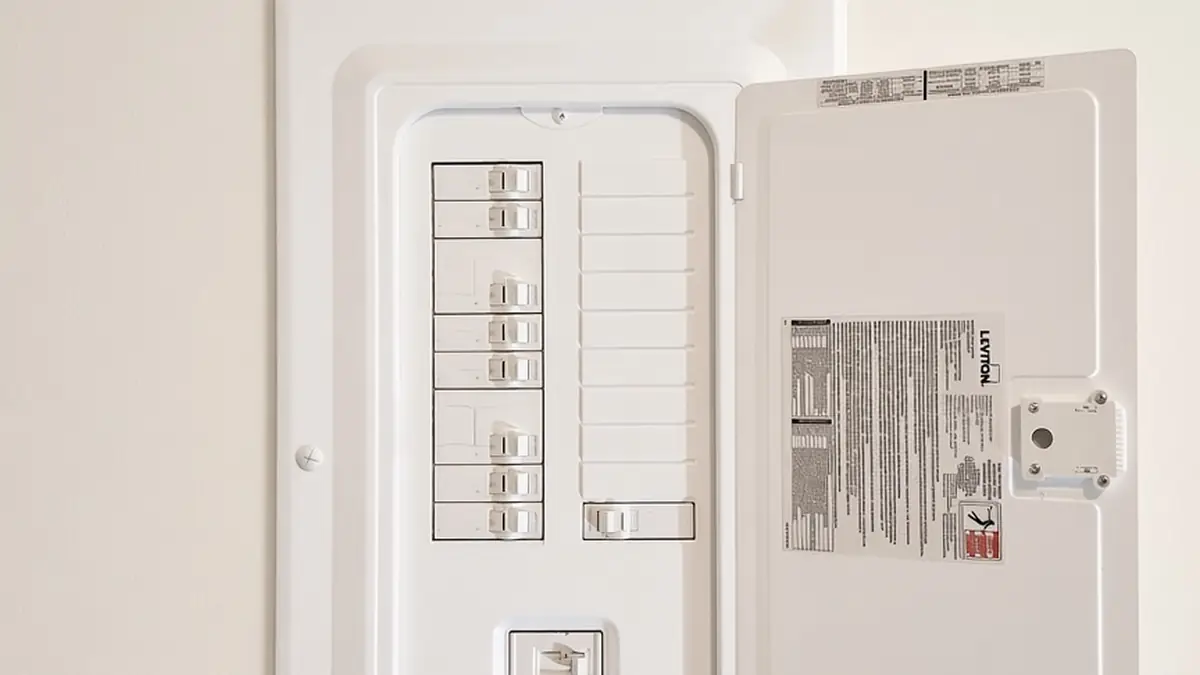
A circuit breaker is a safety switch inside your electrical panel. It cuts power when it detects more electrical current than the circuit can safely handle or when it senses a fault. It is designed to protect the wiring in your walls from overheating.
The most common cause is an overloaded circuit. Many older homes around Newnan were built before today’s households depended on home offices, large televisions, countertop appliances, charging stations, and more. A single 15-amp or 20-amp circuit can become overloaded when several high-demand items run at the same time.
For example, a kitchen breaker may trip when a microwave, toaster oven, coffee maker, and air fryer are all operating. In a garage, a space heater, freezer, power tools, and battery charger can create the same problem. The breaker is not being inconvenient. It is interrupting power before the circuit wiring gets too hot.
An overload usually happens while multiple items are running. If you unplug or turn off a few devices and the breaker stays on, the circuit may simply need better load management. If overloads are frequent, adding a dedicated circuit is the long-term fix. Extension cords and power strips are not a safe substitute for enough permanent electrical capacity.
Short Circuits and Ground Faults
A short circuit occurs when a hot wire touches a neutral wire or another unintended conductive path. It can happen inside a damaged appliance, a loose outlet, a pinched wire, or aging wiring. These faults often cause a breaker to trip immediately when you turn it back on.
A ground fault is similar, but it occurs when electricity takes an unintended path to ground. Ground faults are especially concerning in damp areas such as bathrooms, kitchens, garages, crawl spaces, laundry rooms, and outdoor locations. That is why many outlets in these spaces are protected by GFCI devices.
If a breaker trips when a particular appliance is plugged in, unplug that item and leave it disconnected. If the breaker holds after the appliance is removed, the appliance or its cord may be the problem. If it still trips with everything unplugged, the issue may be in the outlet, wiring, breaker, or electrical panel.
Do not open outlets, remove panel covers, or attempt to repair damaged cords yourself. Electrical faults are not always visible, and a quick patch can leave a hidden fire or shock hazard behind.
AFCI and GFCI Protection May Be Doing Their Job
Newer electrical systems often use AFCI and GFCI protection. These devices can trip for reasons that are different from a standard overload.
A GFCI protects people from shock by detecting an imbalance in electrical current. It may trip because of moisture, a failing appliance, a damaged extension cord, or an outdoor outlet exposed to the weather. One GFCI receptacle can protect other outlets downstream, so a dead garage or bathroom outlet may need a reset at a different location.
An AFCI, or arc-fault circuit interrupter, looks for dangerous electrical arcing. Arcing can come from loose connections, damaged cords, worn switches, failing appliances, or wiring problems hidden behind walls. AFCI breakers can also be sensitive to certain equipment, but repeated trips should never be dismissed as a nuisance. A licensed electrician can determine whether the issue is a defective device, incompatible equipment, or a real wiring hazard.
A Weak Breaker or an Outdated Panel
Breakers do wear out. Heat, age, repeated overloading, and poor connections can affect how reliably a breaker operates. A weak breaker may trip below its rated capacity, feel unusually hot, or fail to reset securely.
Still, replacing a breaker without testing the circuit is not a real diagnosis. A new breaker attached to a damaged wire or overloaded circuit will usually trip too. In the worst case, installing the wrong breaker can allow wiring to overheat.
Some homes and commercial properties also have aging electrical panels that no longer match their power needs. Frequent tripping, flickering lights, limited available breaker space, or an inability to support an EV charger, renovation, or new equipment can point to the need for a panel evaluation. The right solution depends on the condition of the existing equipment and the actual load on the building, not just the age of the home.
What You Can Safely Check Before Calling
Start by identifying which breaker tripped and what area of the property lost power. Turn off lights and unplug devices on that circuit. Push the breaker fully to the OFF position, then firmly back to ON.
If it stays on, reconnect devices one at a time. This can help identify a specific appliance that causes the trip. Avoid running several heat-producing appliances on the same circuit at once.
If the breaker trips again immediately, leave it off. Do not repeatedly reset it. Each trip indicates the breaker detected a condition it was built to stop.
You should also look for obvious signs of trouble without touching exposed electrical parts. A warm or discolored outlet, a cracked plug, water near an outlet, or a cord with damaged insulation all deserve attention. Keep children and pets away from the affected area until it has been checked.
When a Tripping Breaker Is an Urgent Problem
Some breaker trips can wait for a scheduled repair. Others call for prompt service. Stop using the circuit and contact a licensed electrician if you notice any of the following:
- A burning smell, smoke, buzzing, sparking, or scorch marks near an outlet, switch, panel, or appliance
- A breaker that trips immediately and will not remain reset, even with devices unplugged
- An electrical panel that feels hot, makes unusual noises, or shows signs of corrosion or damage
- Repeated trips on circuits serving a refrigerator, HVAC equipment, sump pump, medical equipment, or business-critical equipment
- Water intrusion near outlets, wiring, the electrical panel, or exterior electrical equipment
If there is active smoke, fire, or an immediate threat to people, call emergency services first. Do not use water on an electrical fire.
Permanent Repairs Beat Repeated Resets
The correct repair depends on the cause. It may be as straightforward as replacing a damaged receptacle or removing a faulty appliance from service. It may involve repairing wiring, correcting a loose connection, adding GFCI or AFCI protection, installing a dedicated circuit, or upgrading an overloaded panel.
For property managers and business owners, a tripping breaker can interrupt tenants, customers, refrigeration, computers, lighting, and security systems. The temptation is to restore power quickly and move on. But recurring trips often become more expensive when the underlying cause is left in place. A documented inspection and code-compliant repair protect the property and reduce repeat service calls.
Shocking Electric Solutions provides licensed, insured troubleshooting for homeowners in Newnan and nearby communities. Our electricians identify the actual cause, explain the options clearly, and complete clean, professional workmanship designed to solve the issue right the first time. Completed work is backed by a two-year workmanship warranty.
A breaker that trips is giving you useful warning, not asking to be overridden. Treat it as an opportunity to correct a problem safely before it becomes a bigger disruption.
Tripping Breakers in Newnan-Area Homes
In Newnan, Sharpsburg and Peachtree City, we often trace repeated trips to an overloaded kitchen or garage circuit, a failing breaker, or an older panel that was never sized for today’s appliances. If resetting does not hold, it is time for a diagnosis. Read more on our breaker keeps tripping page, and if your panel is the problem, see electrical panel upgrades.
Shocking Electric Solutions, Inc. is a licensed Georgia electrical contractor (license EN216120) at 1002 Highway 16 W, Suite A, Newnan, GA 30263. We serve Newnan, Coweta County, Senoia, Sharpsburg, Peachtree City, Carrollton, Riverdale and south Atlanta, and our work is backed by a 2-year warranty. Office hours are Monday through Friday, 8 AM to 5 PM, and we can also help with electrical emergencies.
Ready to get it fixed? Call (678) 552-9399, text (470) 516-7261, or book online.
Still not sure what is causing the problem? Our electrical troubleshooting and repair in Newnan, GA service finds the real cause and fixes it safely. See also our page on breaker keeps tripping.