
Electrical problem at home? Talk to a licensed Newnan electrician.
Free estimates · GA License EN216120 · Mon–Fri 8–5
When a storm knocks the power out across Coweta County, a portable generator can keep the refrigerator cold, the lights on, and the furnace fan running. But the way you connect that generator matters just as much as the generator itself. Every year, homeowners get hurt or damage equipment by running extension cords everywhere or plugging a generator straight into a wall outlet. Here is what Newnan homeowners should know about using a portable generator safely, and why a properly installed transfer switch is the right way to power your home during an outage.
Never Backfeed Your Home Through an Outlet
Some people try to power the whole house by plugging the generator into a dryer or wall outlet with a double-ended “suicide cord.” This is called backfeeding, and it is one of the most dangerous things you can do with a generator:
- It can energize the utility lines. Power can flow backward out of your home and through the transformer, putting line workers repairing the outage at serious risk.
- The exposed plug is live. The male prongs on a double-ended cord carry full voltage, which is a shock and electrocution hazard.
- It can damage your home and generator. When utility power returns while the generator is still connected, the result can be fried wiring, appliances, or the generator itself.
- It bypasses your circuit protection. The generator’s output is not managed the way it would be through a proper connection, which raises the risk of overheating and fire.
Whether your power comes from Newnan Utilities, Georgia Power, or Coweta-Fayette EMC, the same rule applies: your generator must be isolated from the utility grid before it powers your home’s wiring.
What a Transfer Switch Does
A transfer switch is a dedicated piece of equipment, installed next to or connected to your electrical panel, that switches selected circuits from utility power to generator power. Because it can only be in one position at a time, your home is never connected to the generator and the utility at once. That is what prevents backfeeding.
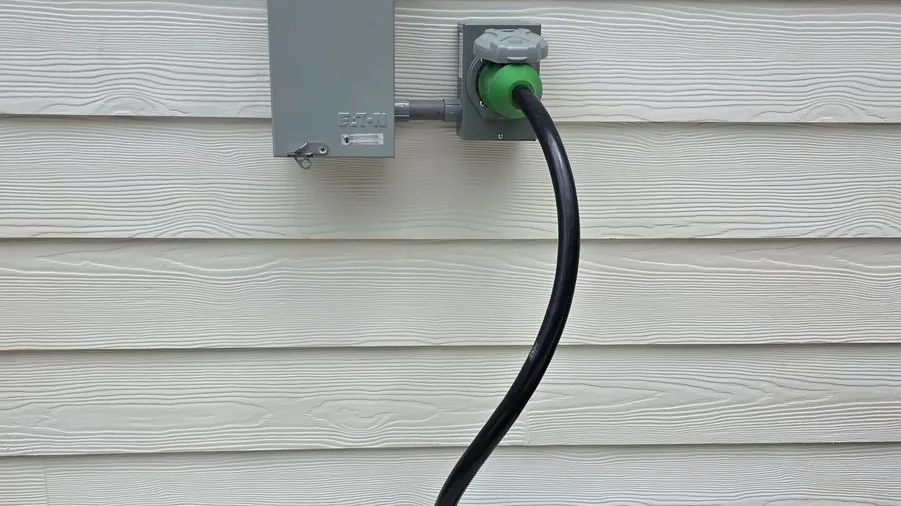
With a portable generator, the setup usually looks like this: a weatherproof power inlet box is mounted on the outside of the house, a single generator cord runs from the generator to that inlet, and a manual transfer switch inside lets you move the circuits you choose over to generator power. No more running cords through windows and doors.
Manual vs. Automatic Transfer Switches
- Manual transfer switches pair with portable generators. You roll out the generator, plug it into the inlet, start it, and flip the switches for the circuits you want. It is a cost-effective setup that works well for many Newnan, Sharpsburg, and Senoia homes.
- Automatic transfer switches pair with permanently installed standby generators. The switch senses the outage, starts the generator, and moves your home over to generator power on its own, then switches back when utility power returns.
You can read more about both options on our generator transfer switch installation page for Newnan, GA.
Choosing Which Circuits to Back Up
A portable generator can only produce so much power, so part of planning a transfer switch is deciding what matters most during an outage. Common essential circuits include:
- Refrigerator and freezer
- Furnace blower or a heat source in winter
- Well pump, if your home has one
- Sump pump
- A few lighting circuits and outlets for phones, internet, and medical devices
Our electricians look at your generator’s rated output and the starting load of motors like well pumps and furnace blowers, then help you pick circuits that the generator can actually handle without overloading.
Safe Generator Habits for Every Outage
- Run it outside only. Never run a generator in a garage, basement, carport, or screened porch, even with the door open. Keep it well away from the house, at least 20 feet is the common guidance, with the exhaust pointed away from windows, doors, and vents.
- Use carbon monoxide alarms. Make sure working CO alarms are installed on every level of the home, especially near sleeping areas.
- Keep it dry. Operate the generator on a dry surface, under an open, well-ventilated cover if it is raining.
- Refuel when cool. Shut the generator off and let it cool before adding fuel, and store fuel away from the house.
- Use the right cord. Use the generator cord made for your power inlet, and inspect it for damage before every use.
Does Your Panel Need Attention First?
Older or crowded panels sometimes need work before a transfer switch can be added cleanly. If your panel is out of space, is an older model with known problems, or already shows warning signs like buzzing or warm breakers, we may recommend an electrical panel upgrade in Newnan, GA as part of the project. Many homeowners also add whole-home surge protection at the same time, since power surges are common when utility service is restored after a storm.
Lost Power to Only Part of the House?
Not every outage is a utility problem. If your neighbors have power but half of your home is dark, the cause may be a failing main breaker, a loose connection, or a problem with your service. See our guide to half of the house losing power in Newnan, GA for what to check and when to call.
Generator Transfer Switch Installation Around Newnan
Shocking Electric Solutions, Inc. installs manual and automatic transfer switches for homeowners in Newnan and communities within about 40 miles, including Peachtree City, Tyrone, Sharpsburg, Senoia, Carrollton, and Riverdale. We size the system to your generator, handle the wiring and inlet installation, and make sure everything is installed to code so it is ready before the next storm, not during it.
Call or Text Shocking Electric Solutions, Inc.
Ready to connect your generator the safe way? Call Shocking Electric Solutions, Inc. at (678) 552-9399 or text (470) 516-7261 to schedule a visit. Many customers prefer texting. We are based at 1002 Highway 16 W, Suite A, Newnan, GA 30263. Learn more about our licensed electricians in Newnan, GA.