
Electrical problem at home? Talk to a licensed Newnan electrician.
Free estimates · GA License EN216120 · Mon–Fri 8–5
A breaker that trips once may have protected your home exactly as it should. A breaker that will not reset, trips again immediately, or comes with a burning smell is telling you to stop and get help. Knowing how to reset a tripped breaker safely can restore power after a simple overload, but it should never mean ignoring a warning sign.
For homeowners and property managers in Newnan and nearby communities, the safest approach is simple: identify the affected circuit, remove the likely cause of the overload, reset the breaker once, and pay close attention to what happens next. If the problem repeats, leave the breaker off and call a licensed electrician.
What a Tripped Breaker Looks Like
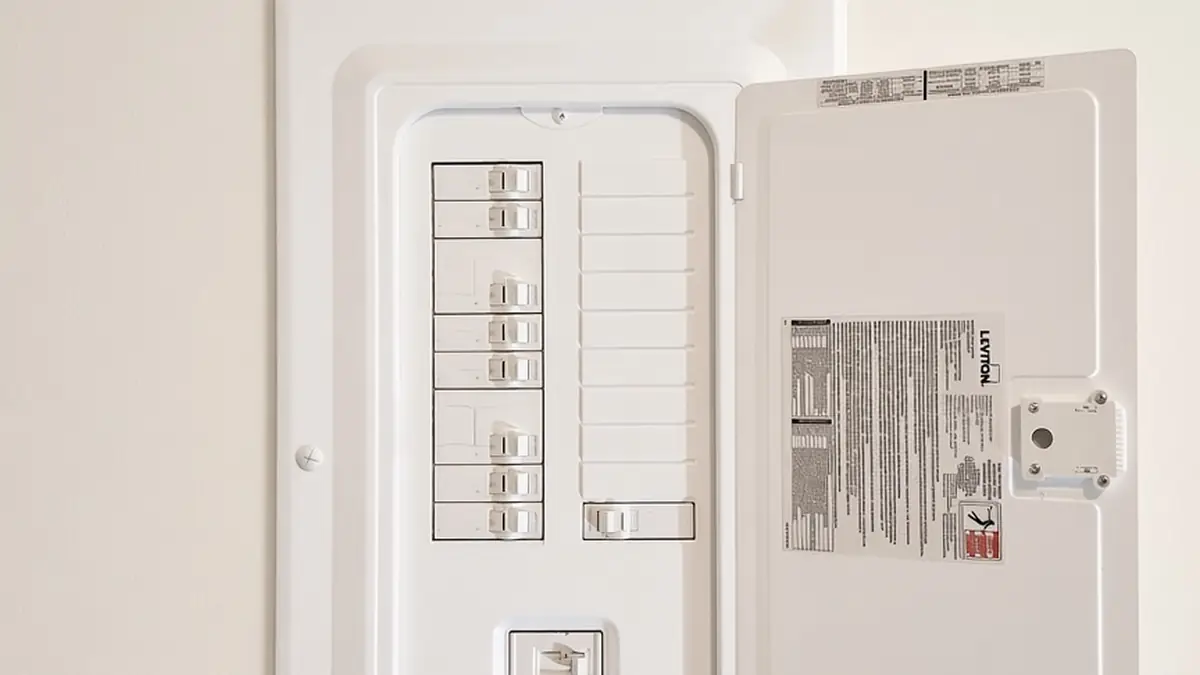
Your electrical panel may be in a garage, basement, utility room, closet, hallway, or exterior location. Inside, each breaker controls a specific electrical circuit, such as kitchen outlets, bedrooms, HVAC equipment, lighting, or a major appliance.
A tripped breaker does not always look completely off. Its handle often rests in a middle position between ON and OFF. Some panels make the position difficult to see, especially in a dim garage or older panel, so do not rely only on a quick glance. Look for a breaker that is not lined up with the others or a circuit label that matches the area without power.
Before touching the panel, make sure your hands and the floor are dry. Do not stand in water, and do not open the panel cover beyond the normal breaker door. Homeowners can operate breaker handles, but the wiring and components behind the panel cover should only be handled by a qualified electrician.
How to Reset a Tripped Breaker Step by Step
First, turn off or unplug devices on the circuit that lost power. If the kitchen counter outlets are out, unplug portable appliances such as a toaster, coffee maker, air fryer, or microwave if it is plugged into that circuit. If a bedroom circuit tripped, turn off lamps, space heaters, electronics, and anything else that may be drawing power.
Next, find the tripped breaker. Move its handle firmly all the way to the OFF position. This step matters because a breaker in the middle position often will not reset if you only push it toward ON.
Then move the handle firmly back to ON. You should feel it click into place. Return to the affected room and test a light or outlet with a simple device, such as a lamp. Avoid plugging everything back in at once. Restore appliances one at a time so you can see whether a particular device causes the breaker to trip again.
If the breaker stays on and power returns, the cause may have been a temporary overload. That can happen when several high-demand appliances operate on the same circuit. A space heater, hair dryer, microwave, and portable heater can use more power than many homeowners expect.
If the breaker trips again, do not keep resetting it. Turn it off, leave it off, and arrange professional troubleshooting. Repeated resets can allow a damaged appliance, loose connection, failing breaker, or wiring problem to continue overheating.
When You Should Not Reset the Breaker
There are situations where resetting a breaker is not a safe do-it-yourself task. Treat these as reasons to stop, keep clear of the panel, and call for electrical service promptly:
- You smell burning plastic, hot insulation, or smoke near the panel, an outlet, or an appliance.
- The breaker, panel cover, outlet, switch, or cord feels hot to the touch.
- You hear buzzing, crackling, popping, or sizzling from the panel or walls.
- You see scorch marks, discoloration, melted plastic, moisture, corrosion, or visible damage.
- The main breaker has tripped, multiple circuits are out, or the panel is making unusual noise.
- The breaker trips immediately after you reset it, even after appliances are unplugged.
If there is smoke, fire, or an immediate threat to people or property, call 911. Do not attempt to investigate a smoking panel or use water on an electrical fire.
Why Breakers Trip in the First Place
A circuit breaker is a safety device. It shuts off power when it detects conditions that could overheat wiring or create a shock or fire hazard. The cause may be straightforward, but it can also point to a problem hidden behind a wall or inside an appliance.
An overload is one common cause. This happens when a circuit is asked to power more equipment than it was designed to handle. Older homes may have fewer circuits, and a room used for home offices, entertainment systems, or portable heating can easily outgrow the available capacity.
A short circuit is more serious. It can occur when a hot wire touches a neutral wire or another unintended path. This may be caused by damaged wiring, a loose connection, a failing appliance, a pinched cord, or a faulty outlet or switch.
Ground faults can also trip a breaker or a GFCI device, especially in kitchens, bathrooms, garages, laundry areas, and outdoors. These areas need additional protection because water and electricity are a dangerous combination. If an outlet is dead but the breaker appears on, look for a GFCI outlet with TEST and RESET buttons nearby. Reset it only if the area is dry and there are no signs of damage.
Modern homes may also have AFCI breakers, which are designed to detect hazardous arcing conditions. These breakers can trip because of a damaged cord, loose outlet connection, failing equipment, or certain electrical issues that need proper diagnosis. Replacing an AFCI breaker with a standard breaker is not a solution and may violate electrical code.
A Breaker That Keeps Tripping Needs Troubleshooting
The key question is not simply whether you can get the breaker back on. It is why it tripped. If it happens once after running several high-demand devices, reducing the load may solve the problem. If it trips repeatedly under normal use, an electrician should inspect the circuit.
Pay attention to patterns. Does the breaker trip only when the microwave and coffee maker run together? Does it happen when you turn on a bathroom fan, use an outdoor outlet, or plug in one particular appliance? Does it occur during rain, after a renovation, or when your air conditioner starts? Those details help pinpoint the source quickly.
Do not solve repeat trips by installing a larger breaker. A breaker must match the wire size and circuit design. Oversizing it can allow wiring to overheat before the breaker shuts off, creating a serious fire risk. Likewise, avoid relying on extension cords and power strips as a permanent answer to too few outlets.
For businesses and rental properties, repeat trips can interrupt operations, damage equipment, and create avoidable safety concerns. Fast troubleshooting can identify whether the issue is a dedicated appliance circuit, overloaded workspace, aging panel, damaged outlet, or larger capacity problem.
When an Electrical Upgrade May Be the Right Fix
Sometimes the circuit itself is functioning correctly, but the home has changed. Added appliances, a garage workshop, EV charging, a finished basement, updated kitchen equipment, or more electronics can place new demands on an older electrical system.
The right answer depends on the problem. You may need a dedicated circuit for a major appliance, additional outlets where people rely on power strips, GFCI or AFCI protection, repairs to damaged wiring, or a panel upgrade that provides safe room for future needs. A professional evaluation should explain the cause clearly and offer an honest recommendation, not a temporary patch.
Shocking Electric Solutions provides licensed, insured electrical troubleshooting for homeowners, property managers, and businesses throughout Newnan and the surrounding area. When a breaker keeps tripping, the goal is to find the actual cause, complete clean, code-compliant work, and make sure the repair is done right the first time.
A breaker that resets and stays on after a clear overload may simply need a lighter load. A breaker that keeps demanding your attention deserves professional attention too. Leave it off, protect your property, and get the issue checked before a small interruption becomes a larger electrical problem.
When a Breaker Will Not Stay Reset
If a breaker in your Newnan, Sharpsburg or Senoia home trips again right after a reset, stop resetting it. Repeated trips mean the circuit is overloaded or faulted, or the breaker is failing. See our breaker keeps tripping page, and if the panel is old or full, read about electrical panel upgrades.
Shocking Electric Solutions, Inc. is a licensed Georgia electrical contractor (license EN216120) at 1002 Highway 16 W, Suite A, Newnan, GA 30263. We serve Newnan, Coweta County, Senoia, Sharpsburg, Peachtree City, Carrollton, Riverdale and south Atlanta, and our work is backed by a 2-year warranty. Office hours are Monday through Friday, 8 AM to 5 PM, and we can also help with electrical emergencies.
Ready to get it fixed? Call (678) 552-9399, text (470) 516-7261, or book online.
Still not sure what is causing the problem? Our electrical troubleshooting and repair in Newnan, GA service finds the real cause and fixes it safely. See also our page on breaker keeps tripping.