
Electrical problem at home? Talk to a licensed Newnan electrician.
Free estimates · GA License EN216120 · Mon–Fri 8–5
A breaker that trips every time the microwave and air fryer run together is more than an everyday inconvenience. It can be a sign that your home’s electrical system was designed for a different era of power use. If you are researching how to upgrade electrical service, the goal is not simply a bigger panel. It is a properly planned, permitted upgrade that gives your property safe capacity for the way you live or work now.
For homes in Newnan and nearby communities, an electrical service upgrade can support an EV charger, a renovated kitchen, a workshop, new HVAC equipment, added office space, or dependable backup power. The right scope depends on the building, the existing equipment, and what you plan to add next.
What an electrical service upgrade actually includes
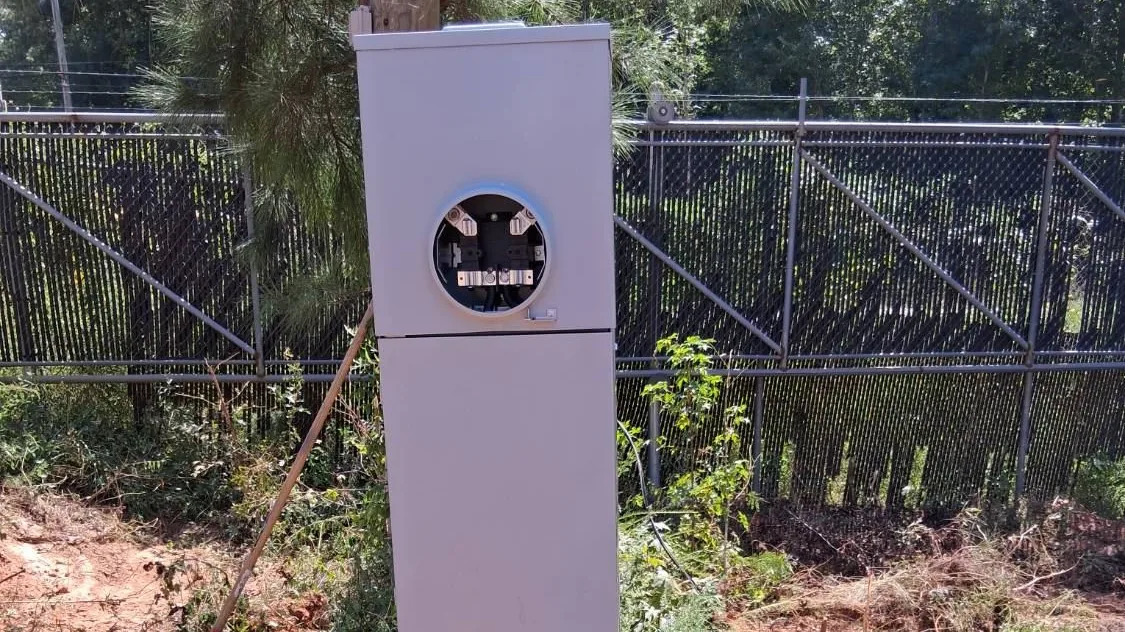
Your electrical service is the equipment that brings power from the utility into the building and distributes it safely through the electrical panel. A full service upgrade may involve the meter base, service entrance wiring, main disconnect, electrical panel, grounding system, and coordination with the utility company.
This is different from adding a few breakers or replacing an old panel cabinet. Sometimes a panel replacement is all a property needs. In other cases, the wires feeding the panel, the meter equipment, or the available utility capacity also need attention. A licensed electrician should inspect the complete system before recommending either option.
Many older homes in the Newnan area were built with 60-amp or 100-amp service. That capacity may have worked when homes had fewer appliances and no EV charging, large entertainment systems, heat pumps, or electric ranges. Today, 200-amp service is common for a modern single-family home, but bigger is not automatically better. The correct service size comes from a load calculation based on the equipment actually in the home and any planned additions.
Signs your home may need more capacity
Electrical service upgrades are often planned around a renovation or major equipment purchase. They can also become necessary when warning signs show the existing system is struggling. Do not ignore burning smells, hot electrical equipment, buzzing, sparking, or repeated breaker trips. Turn off power to the affected area if it is safe to do so and arrange a professional inspection promptly.
Other signs are less urgent, but still worth addressing before they become a larger problem:
- Breakers trip when normal appliances run at the same time.
- Lights dim or flicker when the HVAC, refrigerator, or another major load starts.
- The panel is full, leaving no safe room for required new circuits.
- You are adding an EV charger, electric water heater, hot tub, workshop equipment, or a home addition.
- Your property still has obsolete or visibly damaged service equipment.
For commercial properties, capacity concerns may show up as nuisance trips during busy hours, insufficient circuits for tenant improvements, or equipment that cannot be added without overloading existing distribution. A careful assessment helps prevent downtime and keeps the project from turning into a series of temporary fixes.
How to upgrade electrical service the right way
A safe service upgrade starts with an on-site evaluation, not a guess based on the number printed on a panel door. The electrician identifies the size and condition of the existing service, looks for code and safety concerns, reviews available panel space, and asks about future plans. If you expect to add a generator hookup, electric vehicle charger, pool equipment, or remodeled space in the next few years, say so early. Planning for those loads now can prevent unnecessary repeat work later.
1. Start with a load calculation
A load calculation estimates the electrical demand of the property. It accounts for fixed appliances, heating and cooling equipment, cooking equipment, laundry, general lighting and receptacle demand, and certain planned loads. The calculation determines whether the existing service is adequate and what size upgrade makes sense.
This step matters because a 200-amp upgrade may be appropriate for one home but unnecessary for another. Conversely, installing an EV charger on an already crowded 100-amp service without evaluating demand can create safety and performance problems. Honest recommendations should match the building rather than push capacity you do not need.
2. Select equipment that fits the property
Once the required capacity is clear, the electrician can specify the panel and service equipment. This may include a new main breaker panel with room for expansion, properly sized conductors, updated grounding and bonding, and protective devices such as GFCI or AFCI breakers where required.
The equipment choice also depends on the property’s layout. An indoor panel may need to be moved for clearance or safety reasons. An exterior meter and disconnect may need updating. For some upgrades, existing circuits can remain in place; for others, aging branch wiring or damaged connections should be corrected at the same time.
3. Permit the work and coordinate the outage
Electrical service work generally requires a permit and inspection. The utility company may also need to disconnect and reconnect power while the service equipment is changed. That means there will be a planned outage, often lasting several hours and sometimes longer if the project reveals unexpected conditions.
A professional electrician manages the sequence: permit requirements, utility coordination, installation, inspection, and reconnection. Homeowners should prepare by charging phones, planning for refrigerated food and medical equipment, and arranging access to the panel and meter area. Businesses should schedule work around operating hours where possible and protect sensitive equipment before shutdown.
4. Complete the installation and inspection
During the upgrade, the electrician replaces or installs the approved components, transfers existing circuits carefully, verifies grounding and bonding, labels the panel, and tests the system. The local authority performs the required inspection before final utility reconnection or project closeout.
Clean, professional workmanship is especially important here. Service equipment is the foundation of the entire electrical system. Loose connections, incorrect conductor sizing, missing grounding, or poorly organized panel work may not be obvious to a property owner, but they can create serious hazards and expensive future repairs.
Panel replacement vs. full service upgrade
A panel replacement is often the right answer when the service capacity is adequate but the panel is old, damaged, unsafe, or out of space. For example, a home with a sound 200-amp service may benefit from a larger, modern panel during a renovation without needing new utility-side service equipment.
A full service upgrade is more likely when the existing amperage is too low, the service entrance equipment is deteriorated, or new loads exceed what the system can safely support. The distinction affects cost, scheduling, permits, and utility involvement. An electrician should explain which work is necessary, which work is recommended for future planning, and why.
Common mistakes to avoid
The biggest mistake is treating a service upgrade as a DIY project. Working near energized service conductors carries a severe shock and fire risk, and improper installation can fail inspection or damage expensive equipment. Even experienced homeowners should leave service upgrades to a licensed, insured electrical contractor.
It is also risky to solve recurring overloads by repeatedly resetting breakers, installing larger breakers without evaluating wire size, or relying on power strips as permanent wiring. Breakers are safety devices, not annoyances to work around. If one keeps tripping, it is doing its job by signaling an overload, short circuit, ground fault, or equipment issue.
Finally, do not plan only for today’s electrical demand. If an EV, generator transfer switch, addition, or major appliance upgrade is likely, mention it during the estimate. A little planning can make the finished system more useful without overspending on unnecessary capacity.
Get a clear recommendation before the work begins
The cost of an electrical service upgrade varies with the existing equipment, service size, panel location, meter and utility requirements, code corrections, and access to the work area. A site visit is the only reliable way to price it accurately. Be cautious of one-size-fits-all quotes that do not include an inspection of the service, panel, and intended loads.
Shocking Electric Solutions provides licensed, insured electrical work for homeowners, property managers, and businesses throughout Newnan and surrounding communities. You should receive a straightforward explanation of the options, upfront pricing, and work completed to code – not a short-term patch for a system that needs real attention.
If your panel is crowded, breakers are tripping, or a major electrical project is on the horizon, book an evaluation before the next upgrade is sitting in your driveway or waiting to be installed. A properly sized service gives your property room to operate safely and confidently for years to come.
Service Upgrades in Newnan
Homes in Newnan, Carrollton and south Atlanta that add an EV charger, a pool, a shop or a large addition often outgrow a 100-amp service. A service upgrade means coordinating with Georgia Power or the local EMC. See our electrical service upgrade page and our electrical panel upgrades.
Shocking Electric Solutions, Inc. is a licensed Georgia electrical contractor (license EN216120) at 1002 Highway 16 W, Suite A, Newnan, GA 30263. We serve Newnan, Coweta County, Senoia, Sharpsburg, Peachtree City, Carrollton, Riverdale and south Atlanta, and our work is backed by a 2-year warranty. Office hours are Monday through Friday, 8 AM to 5 PM, and we can also help with electrical emergencies.
Ready to get it fixed? Call (678) 552-9399, text (470) 516-7261, or book online.