
Electrical problem at home? Talk to a licensed Newnan electrician.
Free estimates · GA License EN216120 · Mon–Fri 8–5
A smoke alarm cannot protect your family if smoke never reaches it soon enough. Proper smoke detector placement gives everyone in the home the earliest possible warning, especially at night when a fire can spread before anyone smells or sees it. For Newnan homeowners, landlords, and property managers, this is one safety detail that should not be left to guesswork.
Start With Coverage on Every Level
At a minimum, install smoke alarms on every level of the home, including the basement. That means a two-story home with a basement needs coverage upstairs, on the main floor, and below grade. A finished basement still counts, but so does an unfinished one with a water heater, electrical equipment, stored items, or laundry appliances.
Every sleeping room should have a smoke alarm inside the room. There should also be an alarm outside each separate sleeping area, such as in the hallway outside a group of bedrooms. If bedrooms sit at opposite ends of a large home, each area needs its own nearby alarm. A detector at the other end of the house is not a substitute.
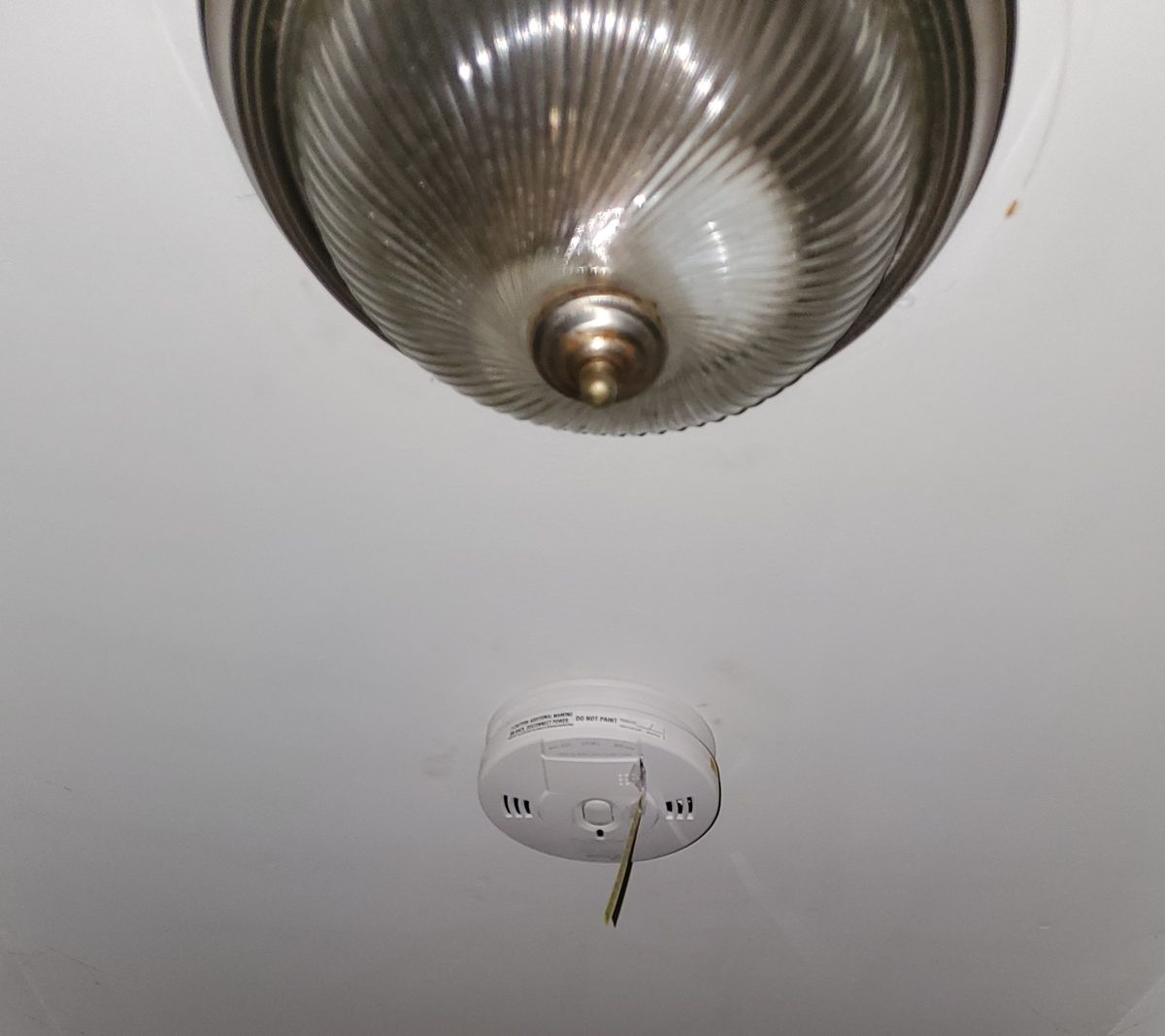
Real photo: a new hardwired smoke detector installed by Shocking Electric Solutions on a hallway ceiling in a Newnan-area home.
This layout matters because closed bedroom doors slow the movement of smoke. An alarm in the hallway may alert the household, but an alarm inside a bedroom gives the person sleeping there a better chance of waking up quickly.
Smoke Detector Placement on Ceilings and Walls
Smoke rises, so ceiling mounting is typically the best choice. Place the alarm on the ceiling, away from corners and wall intersections where air can become trapped and delay detection. When ceiling placement is not practical, a wall-mounted alarm can work when it is installed high on the wall, generally 4 to 12 inches below the ceiling.
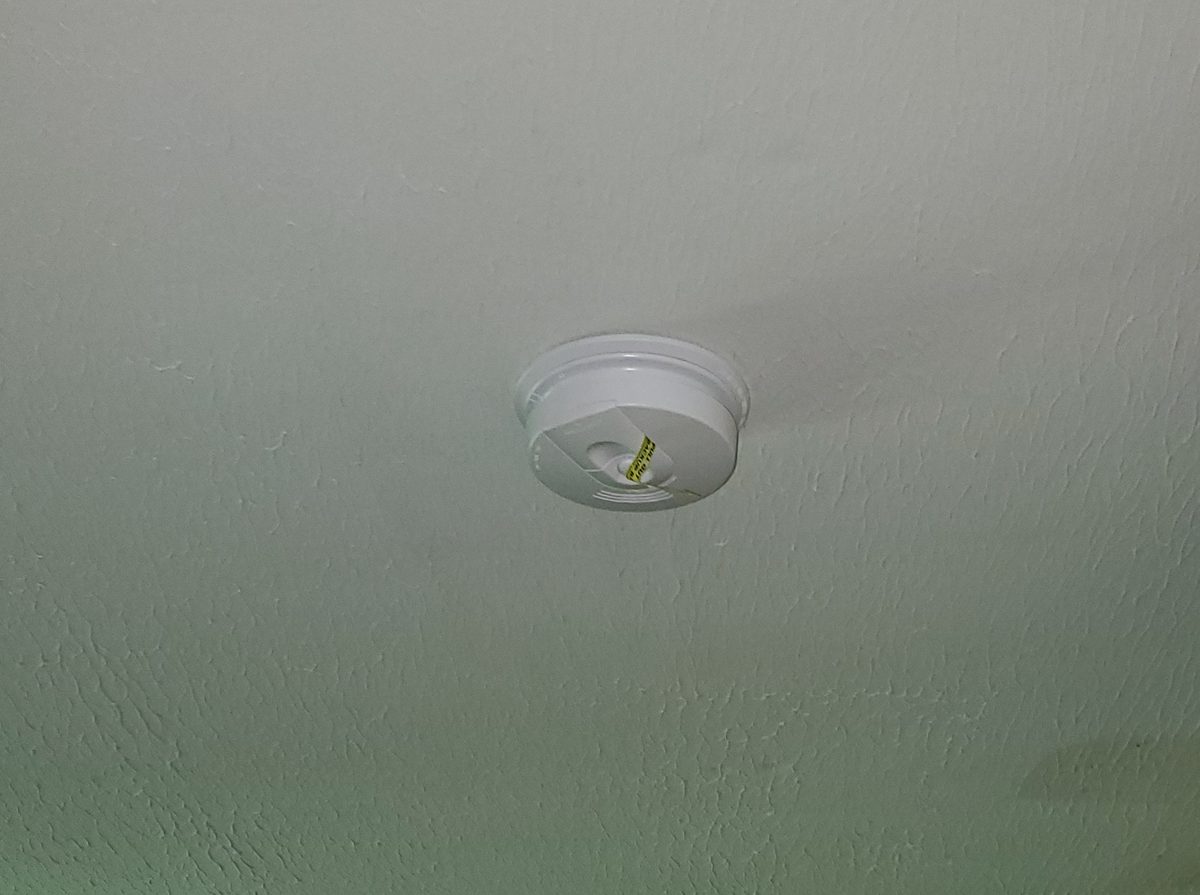
Real photo: a new hardwired smoke detector installed by Shocking Electric Solutions on a textured ceiling in a Newnan-area home.
Avoid placing an alarm directly next to an air supply vent, ceiling fan, open window, or exterior door. Moving air can push smoke away from the sensor or create temperature changes that affect performance. Keep alarms out of dead-air spaces, including the sharp corner where a wall meets the ceiling.
Vaulted, cathedral, and sloped ceilings need extra attention. Smoke can collect near the high point, but placement rules vary by ceiling design and alarm manufacturer. In many cases, the alarm belongs near the peak, not directly on the peak itself. An electrician can assess the ceiling and follow the applicable installation instructions and local requirements.
Keep Kitchen Alarms Close Enough, but Not Too Close
The kitchen is one of the most common places for home fires, yet it is also where nuisance alarms happen most often. An alarm directly over a stove, toaster, or frying pan can lead to frequent false alarms. When people get tired of the noise, they may remove the battery or disable the unit. That creates a much bigger safety problem.
Keep smoke alarms away from stationary cooking appliances according to the manufacturer instructions and local code requirements. A common guideline is at least 10 feet from cooking equipment, though the right location can depend on the room layout, ventilation, and type of alarm. For homes where cooking smoke is a regular issue, a photoelectric smoke alarm may reduce nuisance alarms compared with some other sensor types.
Do not solve kitchen false alarms by moving the nearest detector too far from the sleeping area. Instead, choose the right detector type and location so it can still provide reliable warning without sounding every time dinner is on the stove.
Areas Where Smoke Alarms Often Do Not Belong
Humidity, dust, steam, and temperature extremes can trigger false alarms or shorten an alarm’s service life. Bathrooms are a common trouble spot because shower steam can set off a standard smoke alarm. Garages, unfinished attics, and dusty workshops may also need a different detection strategy than a typical indoor smoke alarm.
Avoid installing standard smoke alarms in these locations unless the alarm is specifically rated and approved for the environment:
- Bathrooms or very close to showers and tubs
- Directly over or beside stoves, ovens, and cooking appliances
- Garages with vehicle exhaust, dust, and temperature swings
- Unconditioned attics or crawl spaces
- Near HVAC vents, ceiling fans, windows, or exterior doors
Carbon monoxide alarms are different devices with different placement requirements. They are valuable protection in homes with fuel-burning appliances, fireplaces, attached garages, or generators, but they do not replace smoke alarms. Many combination units include both sensors, which can simplify coverage when selected and installed correctly.
Interconnected Alarms Give You More Time
One alarm sounding in a basement does little good if people sleeping upstairs cannot hear it. Interconnected smoke alarms are designed so that when one detector senses smoke, every connected alarm sounds. That whole-home warning can be especially important in larger homes, homes with multiple stories, and properties with bedrooms far from the kitchen or basement.
Hardwired interconnected alarms with battery backup are often the strongest option during a renovation, panel upgrade, or electrical project. The electrical connection keeps the alarms powered, while the battery backup helps them continue operating during an outage. Some wireless interconnected systems can also be a practical option when running new wiring would require extensive wall or ceiling work.
The best choice depends on the age of the home, the existing wiring, the number of alarms needed, and the requirements that apply to the property. A licensed electrician can help you avoid piecing together incompatible devices or relying on an outdated setup.
Older Homes and Rentals Need a Closer Look
Many older homes in the Newnan area were built before current alarm requirements became standard. You may find one battery-operated alarm in a hallway, no basement coverage, or alarms that are not interconnected. Even if the home has passed casual inspections in the past, its protection may not match what your household needs today.
Rental properties deserve the same attention. Property owners and managers need reliable life-safety equipment, while tenants need clear instructions not to remove batteries or paint over alarms. Before a new tenant moves in, confirm that each unit is present, operational, properly located, and within its service life. Documenting the inspection is also a smart property-management practice.
If you are renovating, adding bedrooms, finishing a basement, or changing the layout of a home, revisit the alarm plan before walls are closed. This is the right time to add hardwired, interconnected protection instead of treating smoke alarms as an afterthought.
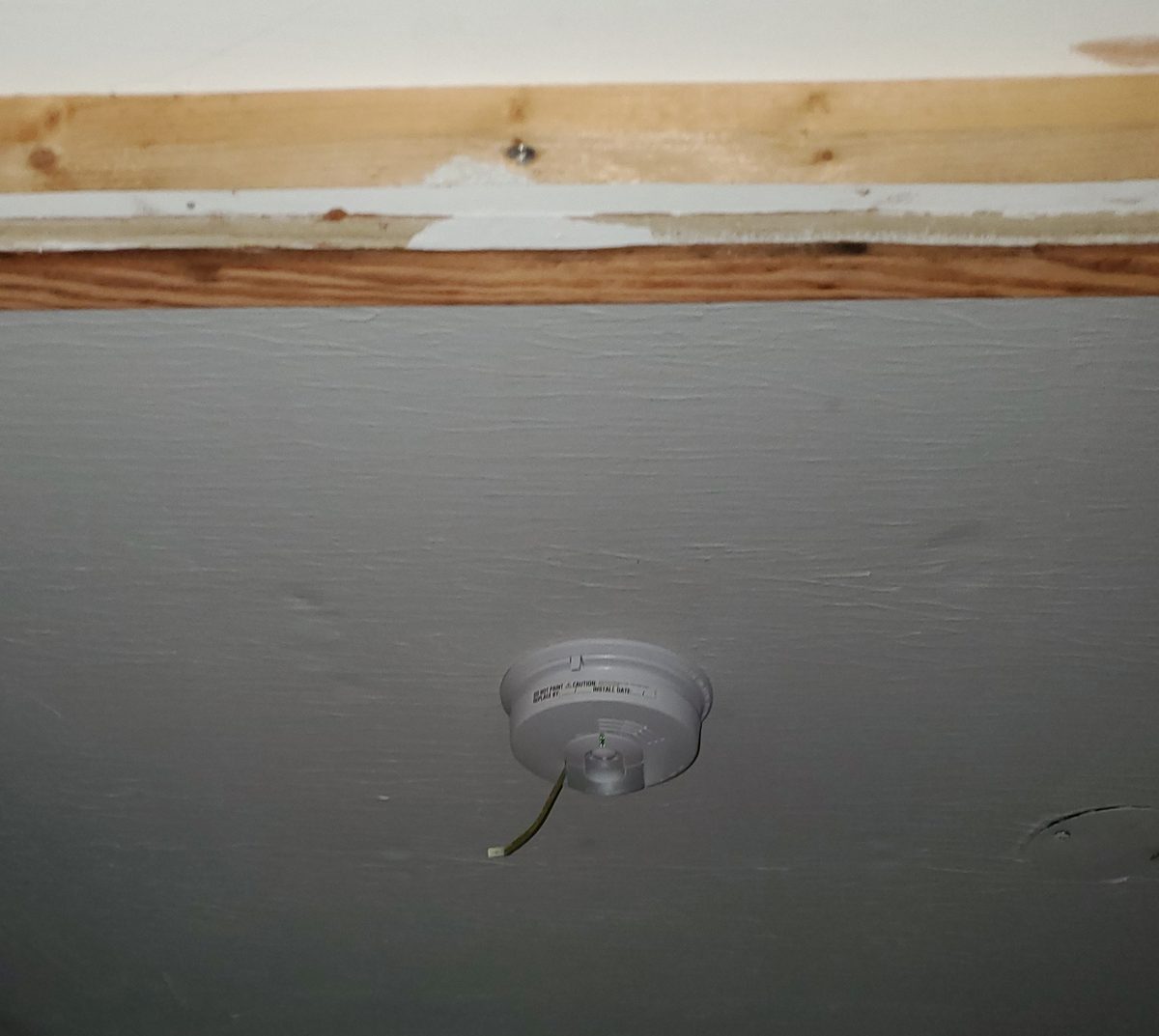
Real photo: a new hardwired smoke detector installed by Shocking Electric Solutions on a ceiling near a wood beam in a Newnan-area home.
Test, Clean, and Replace Your Alarms
Correct placement is only the first step. Test every smoke alarm monthly using its test button. Replace batteries as directed by the manufacturer, unless the alarm has a sealed long-life battery. Keep alarms clean by gently vacuuming the outside with a soft brush attachment so dust does not build up around the sensor.
Check the date printed on the back of each device. Most smoke alarms should be replaced after 10 years, even if they still chirp, flash, or pass a test button check. Sensors can lose sensitivity over time, and a device that looks fine may no longer respond as quickly as it should.
A repeated chirp can mean a low battery, end of service life, contamination, or a wiring issue with a hardwired unit. Do not ignore it or remove the alarm to stop the sound. Find the cause and correct it.
When to Call a Licensed Electrician
Call for professional help when alarms need to be hardwired, interconnected, relocated, or added as part of a remodel. It is also a good idea to have a licensed electrician inspect the setup if alarms are randomly sounding, failing to communicate with each other, losing power, or installed in questionable locations.
Shocking Electric Solutions provides clean, professional electrical work for homeowners and property managers throughout Newnan and nearby communities. We can help evaluate your existing alarms, install code-conscious hardwired protection, and make sure the work is done right the first time.
Tonight, walk through your property and count the alarms: one on every level, one in every bedroom, and one outside each sleeping area. If the answer is no, do not wait for a close call to fix it.
Smoke Alarms in Newnan Homes
Many older homes in Newnan, Carrollton and Riverdale still have battery-only alarms or alarms past their 10-year life. Hardwired, interconnected alarms let every alarm sound when one detects smoke. See our smoke detector installation service and our electrical fire prevention guide.
Shocking Electric Solutions, Inc. is a licensed Georgia electrical contractor (license EN216120) at 1002 Highway 16 W, Suite A, Newnan, GA 30263. We serve Newnan, Coweta County, Senoia, Sharpsburg, Peachtree City, Carrollton, Riverdale and south Atlanta, and our work is backed by a 2-year warranty. Office hours are Monday through Friday, 8 AM to 5 PM, and we can also help with electrical emergencies.
Ready to get it fixed? Call (678) 552-9399, text (470) 516-7261, or book online.